


15th of August 2015, Main Landing Gear Corrosion, Blog #751

With one passenger and a crew of two, a BAE Systems Jetstream 31, powered by two Garrett AiResearch TPE331-10UGR-516H turboprop engines, was operating a scheduled flight between Belfast City Airport and Doncaster Sheffield Airport, 11 years ago to the date.The commander was the Pilot Flying (PF) and the co-pilot was the Pilot Monitoring (PM) for the flight.

After an uneventful flight, the crew requested radar vectors for Runway 20, which was approved by ATC. The weather at the time was recorded as follows:
Wind - 260º at 5 kt, varying between 220º and 280º
Visibility - greater than 10 km
Clouds - few at 3,000 ft AAL (Above Aerodrome Level)
Temperature - 17ºC
QNH - 1,019 hPa
The landing weight was around 5,059 kg, which required a target threshold indicated airspeed (IAS) of 101 kt.

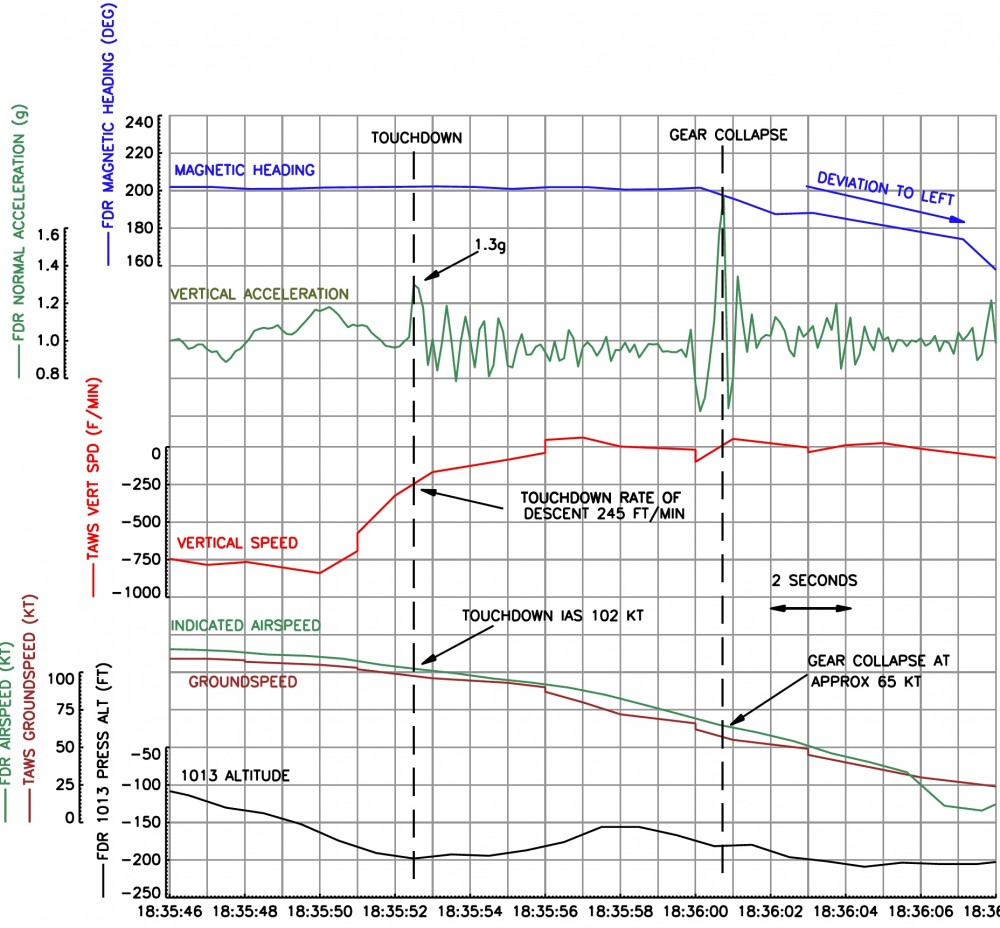
At 18.36 LT (local time), the aircraft touched down at an IAS of 102 knots, with a maximum acceleration of 1.3 g.
The power levers were pulled back, first to ground idle, then to reverse. As the aircraft decelerated, the power levers were brought forward to ground idle, and the rpm levers to taxi.
Eight seconds after touchdown, at a speed of 65 knots, the left wing suddenly dropped, resulting in a yaw to the left. The crew attempted to maintain control of the aircraft with rudder and nose wheel steering inputs, but were unsuccessful. The aircraft exited the left side of the runway, coming to a full stop on the grass at approximately right angles to the runway centerline, just off the runway edge.
The aircraft came to rest on its belly, right landing gear and left wing.
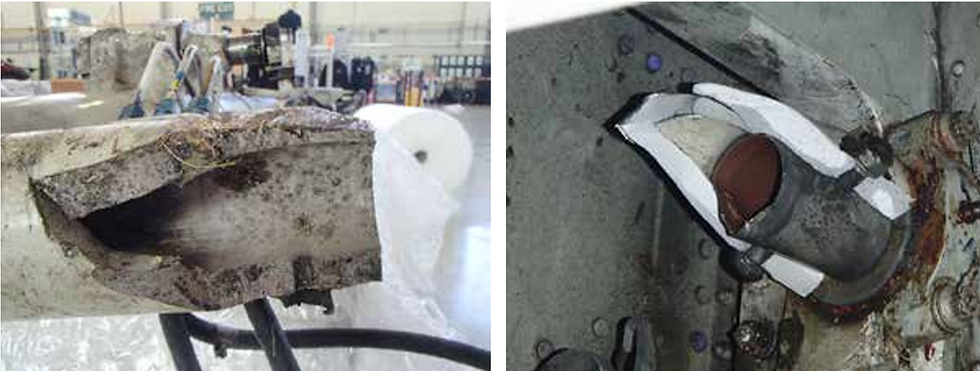
An investigation into the accident was initiated by the United Kingdom Air Accidents Investigation Branch (AAIB).The aircraft sustained substantial damage. The left landing gear (manufactured from DTD 5094 aluminium alloy, Aluminum-Zinc-Magnesium-Copper) had broken away from its trunnions as a result of the failure of the forward yoke pintle housing; two sections of the pintle housing stayed attached to the pintle spigot. However, the landing gear remained attached to the aircraft by the radius arm (retraction jack) and hydraulic pipelines. The blades on the left engine propeller had been badly damaged. The left aileron balance horn separated from the aircraft after it left the runway, becoming lodged in the soft ground. The left wingtip had sustained abrasion damage, resulting in a fuel leak from this area. The baggage pannier and anti-collision beacon on the underside of the fuselage also sustained considerable abrasion damage.
An investigation into the accident was initiated by the United Kingdom Air Accidents Investigation Branch (AAIB).The aircraft sustained substantial damage. The left landing gear (manufactured from DTD 5094 aluminium alloy, Aluminum-Zinc-Magnesium-Copper) had broken away from its trunnions as a result of the failure of the forward yoke pintle housing; two sections of the pintle housing stayed attached to the pintle spigot. However, the landing gear remained attached to the aircraft by the radius arm (retraction jack) and hydraulic pipelines. The blades on the left engine propeller had been badly damaged. The left aileron balance horn separated from the aircraft after it left the runway, becoming lodged in the soft ground. The left wingtip had sustained abrasion damage, resulting in a fuel leak from this area. The baggage pannier and anti-collision beacon on the underside of the fuselage also sustained considerable abrasion damage.
The crew initiated the relevant emergency checklist(s) and informed ATC.
Who responded, "Copied, emergency services on their way."
The co-pilot checked on the passenger and initiated an evacuation through the main exit. The cabin door released normally but would not open completely because the sill of the doorway was at ground level. Nevertheless, all occupants were able to evacuate the aircraft through the main exit. Their were injuries.

An investigation into the accident was initiated by the United Kingdom Air Accidents Investigation Branch (AAIB).The aircraft sustained substantial damage. The left landing gear (manufactured from DTD 5094 aluminium alloy, Aluminum-Zinc-Magnesium-Copper) had broken away from its trunnions as a result of the failure of the forward yoke pintle housing; two sections of the pintle housing stayed attached to the pintle spigot. However, the landing gear remained attached to the aircraft by the radius arm (retraction jack) and hydraulic pipelines. The blades on the left engine propeller had been badly damaged. The left aileron balance horn separated from the aircraft after it left the runway, becoming lodged in the soft ground. The left wingtip had sustained abrasion damage, resulting in a fuel leak from this area. The baggage pannier and anti-collision beacon on the underside of the fuselage also sustained considerable abrasion damage.
Preliminary metallurgical examination of the fracture faces on the left landing gear established that the failure had initiated at the top outer edge of the forward yoke pintle and that the crack propagated axially along the top of the pintle, before final overload failure occurred. The presence of corrosion was identified at the crack initiation site. The forward face of the yoke pintle housing exhibited rotational wear marks and corrosion pitting. Together with other findings, this provided strong evidence that the crack initiated due to stress corrosion cracking.
The AAIB Special Bulletin that served as the source for this blog can be accessed by clicking on the link below: https://assets.publishing.service.gov.uk/media/5423004640f0b61346000b05/S5-2014_G-GAVA.pdf


A well-defined target audience can also improve advertising performance, content strategy, product development, and customer http response code 302 communication by providing a clearer understanding of who the organization is trying to serve.
Professional cleaners can address areas that are often missed during quick everyday cleaning including top tier cleaning services corners baseboards fixtures bathroom surfaces, and kitchen details.
When evaluating a Fuji elevator manufacturer, customers may consider factors such as product range, manufacturing standards technology installation expertise and maintenance services.
However, durability depends on more than the material itself. Proper installation, ventilation, drainage, flashing, and routine rubber roof material to a roof’s service life. Local climate should also influence the decision, since strong winds, heavy rainfall, extreme temperatures, and sunlight can affect different materials in different ways.
Removing tree debris promptly can improve the appearance of a property while reducing potential hazards. A complete tree service often includes cleanup as an important final step, helping ensure the site is left organized, accessible, and ready for normal use.