


3rd of August 2020, Electrical Failure, Blog #715

An 26-year old Antonov An-74TK-100 was operating a cargo flight on behalf of the United Nations (UN) between the airports of Bamako and Gao (both in Mali) on this day in aviation history in the year 2020. On board the aircraft were a crew of seven and four UN staff.

Shortly after becoming airborne out of Bamako, high vibrations were indicated in the flight deck for the left-hand engine (a Lotarev D-36-3A engine). As the crew increased the monitoring of the engine, the flight encountered clouds with icing conditions. The aircraft's anti-ice systems were selected to on, with the engine anti-icing the manual mode. A little later the aircraft encountered turbulence, the autopilot was turned off, and the captain flew the aircraft manually. 70 minutes after departure, the crew was faced with a right-hand generator failure, followed by the failure of the left-hand generator 49 seconds later. An (unsuccessful) attempt was made to start the APU, after which the aircraft was descended from FL250 (7620 meters) to FL197 (6000 meters), leaving icing conditions. While maintaining FL197 several APU start attempts were made, all unsuccessful. Subsequently, the aircraft was descended to FL 100 (3000 meters), again several APU start attempts were made, all unsuccessful.

20 minutes after the left-hand generator failure, the aircraft batteries were depleted, resulting in a total electrical failure. The crew attempted to contact ATC at GAO by mobile telephone, but were unsuccessful. The landing gear was lowered using the manual procedure, to make their intentions clear, a low pass was flown over the runway at Gao at an altitude of 250 feet. After the low pass, the aircraft was lined up for a zero-flap landing (no flaps available due to the electrical failure) at runway 25 of Gao. The aircraft touched down 500 meters (1640 feet) from the runway threshold. Due to the electrical failure, speedbrakes and reverse thrust were not available, resulting in a runway overrun. The aircraft came to a stop 389 meters past the runway end, receiving substantial damage when colliding with sewage works. Causing serious injuries to the first officer and the navigator. There was no post-accident fire. An investigation was launched by the Interstate Aviation Committee (MAK), in their report, they gave the following possible cause(s) for the runway overrun;
The landing was performed on a fully unpowered aircraft with wing flaps retracted, without the possibility of using spoilers and engine reversers for braking. Immediately after landing, the wheel brake system failed due to its usage by the crew at speeds significantly exceeding the established FCOM maximum values for the An-74TK-100 aircraft. The landing under these conditions exceeded the expected operating conditions, as there is no data in the FCOM for its calculation and execution.
The following contributing factors were reported
The absence of information in the FCOM regarding landing calculation and crew actions during unpowered flight this due to the aircraft developer's assessment of such a situation as practically improbable.
Poor servicing of the generator oil systems and a lack of proper control over their execution, leading to exceeding the permissible maximum oil level, its overheating in flight, melting of thermal sensors, and sequential automatic disconnection of two GP21 generators.
Failure of the crew to adhere to standard operational procedures for the APU in-flight (failure to activate the APU compartment heater), as well as the preparation and start-up methods outlined in the FCOM, which led to the inability to start the APU and complete loss of power in the aircraft after the battery voltage dropped below the permissible value.

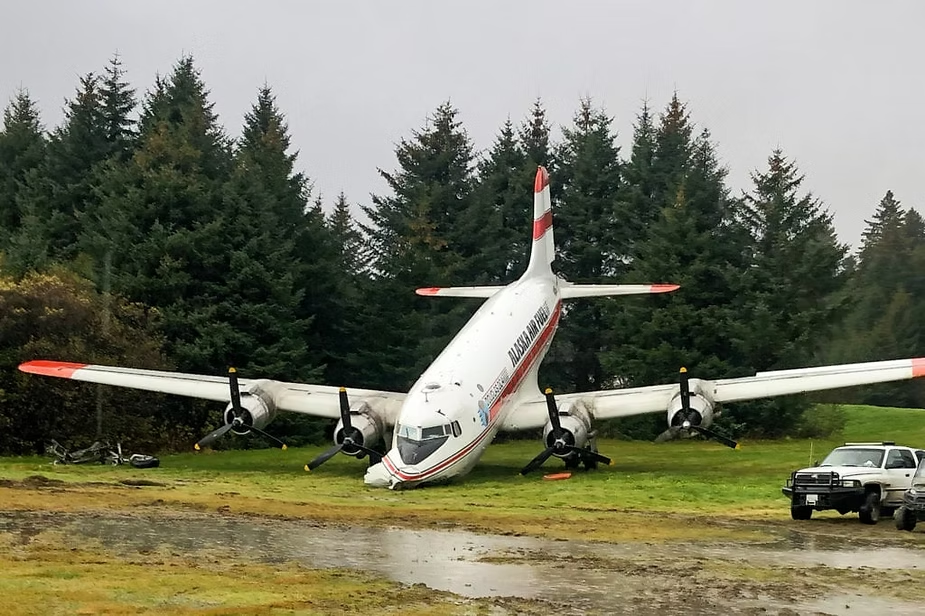
The aircraft in its final position after the runway overrun (Source baaa-acro.com © Unknown)
The MAK report, in Russian, is available for reference by clicking on the .pdf file below;
** Editorial note **
V2 Aviation - Training & Maintenance has been unable to obtain an English investigation report on this accident. This blog is therefore based on several internet sources. Should there be inconsistencies in the blog, don't hesitate to get in touch with us. There are two possibilities to do that, via the comments function at the bottom of this page or via the contact page of the website.


Comments