


6th of July 2008, Bearing Blog #748

A Saab 340B was being prepared for its next flight of the day from Orange Aerodrome to Sydney (Australia), a scheduled flight with 31 passengers and a crew of three, on this day in aviation history, 2008.
After arriving from its previous flight, the first officer performed a post-flight inspection and a final external check in accordance with the Flight Crew Operations Manual.
This included, among other items, a visual inspection of the tyres and landing gear assemblies. No abnormalities were observed.
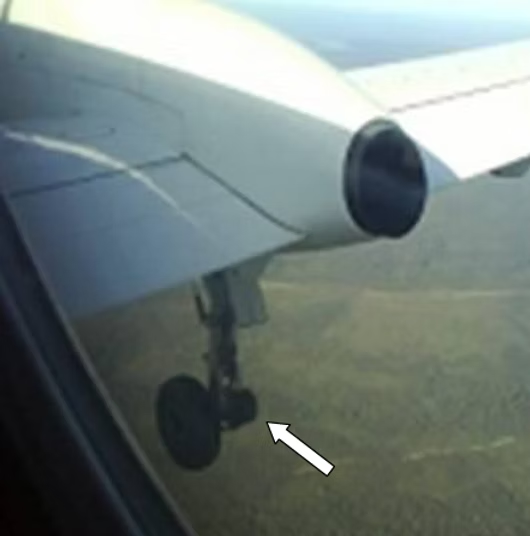
After boarding was completed, the engines were started and the aircraft taxied to the runway. After the necessary checklists were completed, the aircraft commenced its take-off run and became airborne. Directly after lift-off, the crew was contacted by the pilot of another aircraft who had seen that the right-hand main landing gear outboard wheel (Wheel #4) had detached from the aircraft at the time of rotation on the runway.
The crew continued with the take-off and departure procedure after acknowledging the call. Once these were completed, the crew contacted the other pilot again and he verified the previous message.
As there were no abnormal system indications, the crew decided to continue to Sydney. The cabin crew was informed and, for the moment, a normal service was carried out without informing the passengers.
A check of the Quick Reference Handbook for any applicable procedures was performed, but none were found. During the course of the flight, the captain informed the passengers of the situation, explaining that he expected a normal landing in Sydney.

ATC had also been informed and, in consultation with the crew, runway 07 was selected as the landing runway due to the current wind conditions, which would allow an initial touchdown on the left main landing gear. The gear was lowered 25 miles from the runway, and an inspection from the cabin revealed that the wheel was missing but that no further damage was evident.
After the cabin was prepared, the aircraft was established on the approach to runway 07 at Sydney with a flap setting of 35º.
The pilot touched down on the left main gear first and kept the right main gear off the ground as long as possible. At 80 knots, the right main gear settled onto the runway and the crew allowed the aircraft to slow down without the use of wheel brakes or reverse thrust.
There was no further damage to the aircraft and none of the occupants sustained any injuries.
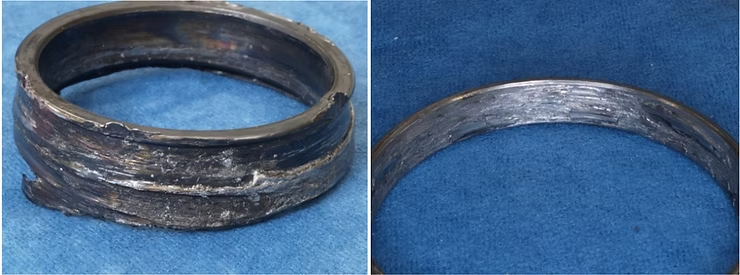
The Australian Transport Safety Bureau (ATSB) investigated the incident and subsequently inspected the aircraft’s landing gear assembly and the detached wheel, which was located in a field approximately 1 km from the point where the aircraft became airborne at Orange Aerodrome. In their report (available by clicking on the field "Saab 340B Wheel.pdf" below the blog), they identified the following contributing safety factor:
"The detachment of the right outboard wheel occurred as a result of the breakdown of the outboard wheel bearing. The mechanism for bearing failure could not be established."
As a safety factor, it was noted that the torque wrench used for the fitment of the wheels was operated outside its calibrated torque range and may have contributed to incorrect torque application. (This was marked as a safety issue.)


Comments