


8th of March 1998, Fuel Fire, Blog #737

28 years ago to this date, a McDonnell Douglas DC-10-30 was scheduled to operate an intercontinental flight between Manchester (England) and Newark Airport (USA).
On board the aircraft were a crew of 14 and 249 passengers. There were no defects on the aircraft, and the weather was good.

After the engines were started, the aircraft was cleared to taxi to the holding point of Runway 06 at 11:32 LT (local time). Four minutes later, after a short taxi, the aircraft was handed over to the tower controller. At that time, the flight deck crew were contacted by the cabin crew, informing them of an unusual smell in the cabin. Although there was no abnormal indication, the flight crew also observed a slight smell of what they thought was gasoline.
At 11:39, the co-pilot asked the tower for clearance to return to stand, which was granted. As the aircraft was taxiing back to the terminal, the tower controller saw and subsequently informed the crew of some vapour that was visible venting from the #2 engine (tail engine). The aircraft was stopped on the taxiway, and the captain requested the presence of the fire brigade, which was on the scene within a very short time, as the aircraft had stopped only about 200 metres from the fire station
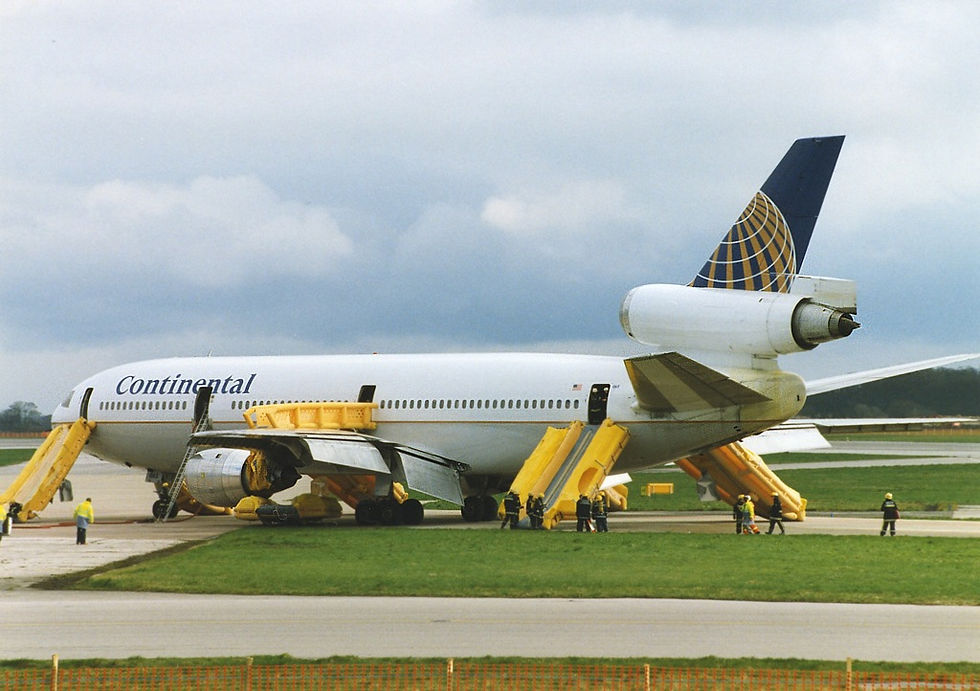
Upon the arrival of the fire brigade, the captain informed them that there were fumes in the cabin. While communicating with the flight crew, the fire officer observed fuel running from the #2 engine and informed the captain about this. The firefighters then observed a fire starting in the #2 engine and advised the captain to evacuate the aircraft. The evacuation was immediately initiated following the required checklists and completed quickly. While the evacuation of the aircraft was carried out, the firefighters extinguished the fire.
An investigation into the fuel leak and the subsequent engine fire was launched by the Air Accidents Investigation Branch (AAIB) of the United Kingdom. In their report, the AAIB identified the following probable cause of the incident:
An internal leak in the Fuel Cooled Oil Cooler (FCOC) — engine oil is cooled using fuel as a cooling medium — caused fuel to enter the oil system, which caused the oil system to slowly fill up with fuel, resulting in fuel vapour in the oil system vent system being ignited in the exhaust. A large rupture was found in the FCOC caused by fatigue and interference between cooling pipes in the FCOC.

The mode of failure of the FCOC was, for all practical purposes, identical to a previous failure of a brazed tube FCOC investigated by the AAIB. This earlier failure also occurred on a DC-10-30 aircraft and was the subject of an earlier detailed report published by the AAIB (AAIB Bulletin 4/99).
In the case of the earlier failure, deficiencies in the material properties of the divider plate in the area of the brazed attachment of the plate to the casing, attributed to poor grain structure due to inadequate control of the post-braze quenching processes during manufacture, were identified as a factor contributing to the initiation of fatigue cracks in the divider. Metallurgical examination of the FCOC divider plate from this incident revealed similar deficiencies in the strength of the divider material in the area of the fatigue fractures. However, in this case it was attributed to a failure of the material to meet the required specification rather than to poor grain structure.
This FCOC was last subject to inspection and testing in January 1996. There was no record of rising engine oil contents or abnormal oil consumption during the period leading up to this incident.
As a result of these incidents, the OEM (Original Equipment Manufacturer) of the FCOC issued a Service Bulletin with revised borescope and X-ray inspection instructions.
During the evacuation, there were problems with three (of the eight) evacuation slides. The problems ranged from partial inflation to no inflation. In their report, the AAIB also provided details on the reasons for the slide inflation issues.
After the necessary repairs, the aircraft was released to service.
The AAIB report, which served as the source for this blog, can be accessed by clicking on the .pdf file below.


Comments